The frame of play
A cricket picture can be easy to recognise and difficult to interpret. A bat, a wicket and a white uniform identify the sport, but they do not necessarily identify the striker, the bowler's end or the moment in the delivery. Orientation is the first reading task. Before discussing tactics or technique, establish which relationships the frame actually preserves.
This essay treats a photograph as a limited record rather than a transparent view of the whole match. The image can show position and gesture, but the explanation must respect its scale, crop and timing. A useful reading begins with a few visible anchors and leaves the rest open until another source supplies it.
Find the pitch before naming the sides
The pitch connects the two wickets and provides a reference for the central action. In a wide view it may be visible as a distinct strip; in a close crop only one end may remain. Find that reference before describing a player as moving left or right. Screen direction is a property of the image, not a permanent fielding label.
The striker and non-striker occupy different ends in relation to the delivery. Their roles are not established simply by which player appears nearer the camera. A photographer can stand at many positions, and a broadcast can switch ends between shots. Read the visible action and surrounding record rather than assigning roles from a familiar composition alone.
If the pitch or second wicket is outside the crop, say so. A narrow image can still support an observation about a gesture or piece of equipment. It may not support an account of the whole field. Identifying that limit makes the picture more useful because the reader knows which question it can answer.
Establish the batter's reference
Off side and leg side relate to the striker, not to fixed halves of the television screen. A right-handed and a left-handed batter change that relationship. If you memorise one camera view as a universal diagram, the next change of striker can make a field description appear reversed.
Look for enough of the stance and action to establish the reference. A rear view or a tightly cropped portrait may not show it clearly. Do not turn a guess into a technical label merely because the surrounding article expects one. A broader phrase such as the visible side of the field can be more accurate when orientation is unresolved.
The same care helps when comparing two photographs. They may show different batters, ends or stages of play. Matching their crops does not make their directions equivalent. A clear comparison states the relationship being compared and checks that the reference remains consistent before interpreting the apparent difference.
Separate a position from a trajectory
A still photograph freezes one instant. It can show where the ball appears at that instant, but not its entire path before and after. A caption that claims swing, seam movement or a particular bounce therefore needs more than the mere presence of the ball in a sharp frame.
The visible body position has a similar limit. A batter's follow-through does not reconstruct every stage of the stroke. A fielder leaning in one direction may be reacting to an event outside the frame. Describe the visible posture first, then distinguish any proposed explanation from what the image directly records.
A sequence or a clearly identified replay may add the missing path. Even then, the viewpoint needs to preserve the relevant part of the action. More frames are useful only if they show the event required by the question. A long sequence that never reveals the bounce point cannot establish its exact location.
Read distance as part of the evidence
A wide photograph can preserve the relationship between fielders while making small details difficult to identify. A close picture can reveal a hand position while removing the surrounding field. Neither scale is a universal upgrade. The useful scale depends on whether the question concerns an individual action or the arrangement around it.
Perspective can also compress space. A gap that looks small along the pitch may not be small on the ground. Without a reliable scale or calibrated view, avoid attaching precise distances to those impressions. Qualitative descriptions can remain helpful without pretending to be measurements.
Cropping changes the balance again. Removing context can improve emphasis, but it can also make an isolated gesture look more decisive than it was. Ask what the reader can still locate after the crop. If the action's reference disappears, the accompanying description needs to restore it honestly or narrow its claim.
Use the caption to restore the right context
A caption can identify visible elements and explain why the photograph accompanies the text. It should not invent a match, date, intention or outcome that has not been established. An illustrative image can support a useful point without pretending to document the fictional passage in the article.
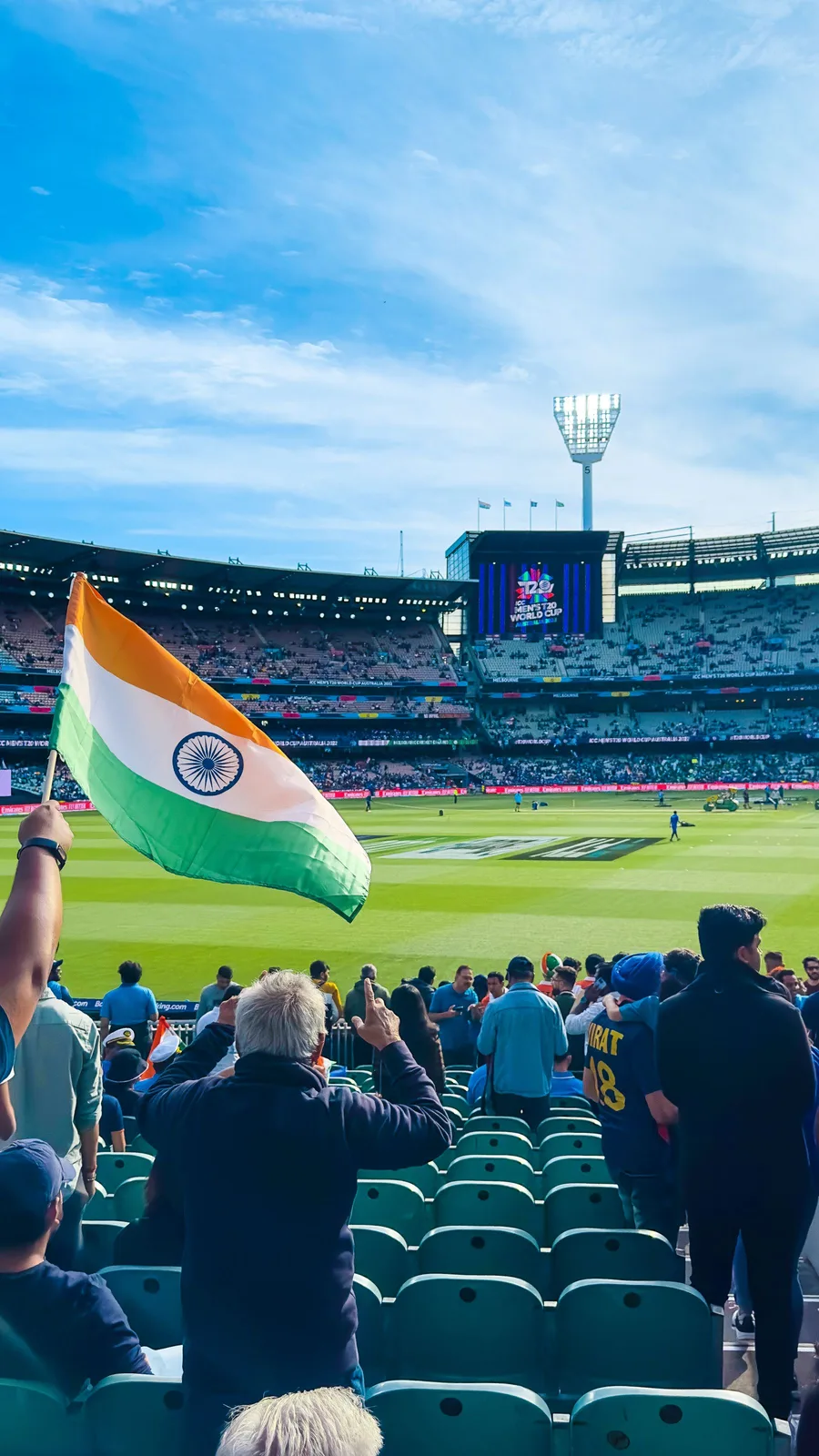
For example, a wide ground view can illustrate how much context a close crop removes. That does not mean the ground belongs to the same event as a nearby batter portrait. When images come from different settings, keep their roles clear. Layout can create a visual sequence even when no chronological sequence exists.
The commercial destination is another separate relationship. Cricketin is a sponsored provider reference, not the source or verification of the illustrative photograph. Read the image through its caption and the provider through its own current information. A shared page does not make those two sources interchangeable.
Visit CricketinCompare two views with one stated question
Suppose the question is whether the whole field arrangement remains visible. Compare the crops for that specific purpose. A wider frame may retain more positions, while a closer frame may lose them. That conclusion does not establish that the wider photograph is better for studying a batter's expression or the seam of the ball.
Now change the question to the visible detail of equipment. The closer frame may become more useful, provided the detail remains clear. The preferred image changes because the reading task changes. There is no need to invent an overall quality score that combines unrelated purposes into one ranking.
Keep the comparison's assumptions in the text. If the two photographs use different angles or depict different settings, that difference may explain part of what you see. A useful analysis does not erase those differences merely to produce a cleaner before-and-after story.
Return to the record when the picture stops answering
A photograph cannot supply every quantity needed to follow a match. The scorecard identifies innings, runs and dismissals; a sequence may explain order; the playing conditions define relevant rules. Use those records when the question goes beyond what the frame preserves. The image remains valuable without becoming the answer to everything.
If a later source changes the interpretation, revisit the caption as well as the headline. A corrected match identity or action description can alter the meaning of a previously plausible sentence. Updating only a number may leave the visual explanation pointing towards a conclusion the evidence no longer supports.
The habit to retain is simple: locate the reference, name what is visible and separate it from the proposed explanation. A clear frame of play is not necessarily a wide photograph. It is an account in which the reader can tell which relationships are shown and which still need another source.
Continue with the main edition, or read Before, during, after.